

Celtic Lodge SFA Appeal Against Auston Trusty Red Card
Celtic have confirmed that they will appeal the red card shown to Auston Trusty following VAR intervention during Sunday’s 2–2 draw with Hearts at Tynecastle.





The club’s stance is calm and deliberate, grounded in what unfolded on the pitch rather than the noise that followed. From Celtic’s perspective, the decision to appeal is about process, consistency, and whether the laws of the game were correctly applied.
The match itself was already finely balanced before the red card changed everything. Celtic arrived in Edinburgh just days after a European fixture, short of options, yet still managed to score twice away from home against the league leaders. They were protecting a narrow lead when the game turned on one moment.
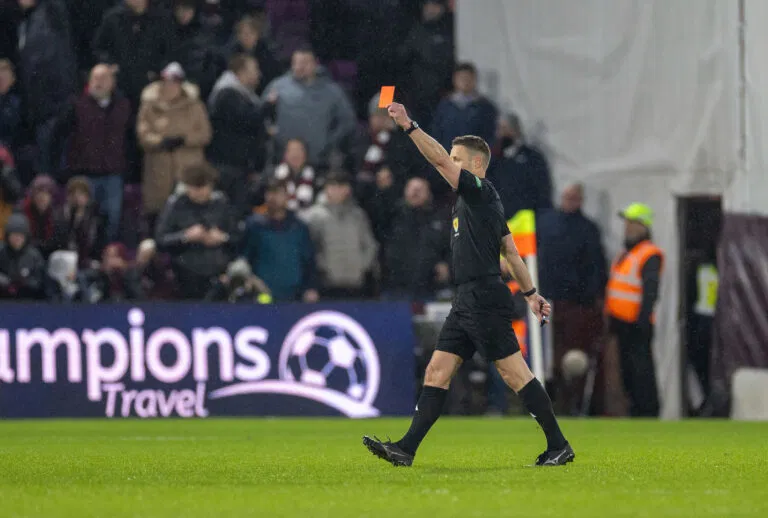
Trusty was initially shown a yellow card by referee Steven McLean for a foul on Pierre Landry Kaboré. McLean was well positioned, had a clear view, and made an immediate decision. That judgement was later overturned after VAR official John Beaton advised an on-field review.
That sequence matters. The referee saw the incident live and decided it did not warrant a dismissal. VAR is designed to correct clear and obvious errors, not to re-referee incidents that sit firmly in a grey area. This one contained doubt, which is central to why Celtic believe an appeal is justified.
The key question is whether the foul denied an obvious goal-scoring opportunity. From the footage, the ball is moving away from goal rather than directly towards it. Kaboré still has work to do to bring the ball under control and is not clean through with the ball running perfectly into his path.
There is also defensive cover to consider. A Celtic defender is tracking back inside the box and is close enough to challenge or at least apply pressure before a shot can be taken. That presence alone weakens the case for a straight red under the laws as written.
Once Trusty was sent off, the shape of the match changed completely. Celtic dropped deeper, Hearts pushed higher, and the pressure became relentless. The equaliser came from a set piece during a spell where Celtic were defending with ten men and stretched across their own box.
That context matters. A red card does not punish a single action in isolation. It alters the flow of the game, affects substitutions, and reshapes how space is defended. Celtic were forced into survival mode in a match they had been managing.
The appeal is not about denying responsibility or claiming mistakes never happen. It is about whether the threshold for VAR intervention was truly met. Celtic believe it was not, and the available footage supports that position.
Martin O’Neill made his views clear after the match, but this appeal is not driven by emotion. It is about process. If VAR can overturn an on-field decision in a situation that is not clear-cut, clubs are entitled to challenge that interpretation.
Consistency is also a factor. Similar incidents this season have resulted in yellow cards or no VAR intervention at all. That uneven application creates frustration, especially when decisions have a direct impact on results in a tight title race.
Celtic’s decision to appeal is measured. They are not attempting to relitigate the entire match, only to ask the SFA to review a single call that carried significant consequences and did not clearly meet the standard for a red card.
Trusty himself is central to the issue. He was not reckless, did not use excessive force, and did not deny a clean, uncontested run on goal. With Celtic already stretched defensively, losing a centre back to suspension over a debatable decision is a serious concern.
There is also a wider picture. Fixtures are coming thick and fast, including European commitments where squad depth matters. Margins are already thin, and decisions like this carry real weight.
Backing the appeal is not about tribal loyalty. It is about football logic. Calls of this magnitude should only stand when the criteria are met beyond doubt. In this case, they were not.
By appealing, Celtic are using the correct channels to seek clarity, accountability, and consistency. In a season shaped by fine margins, that matters far more than allowing a questionable decision to quietly pass.