
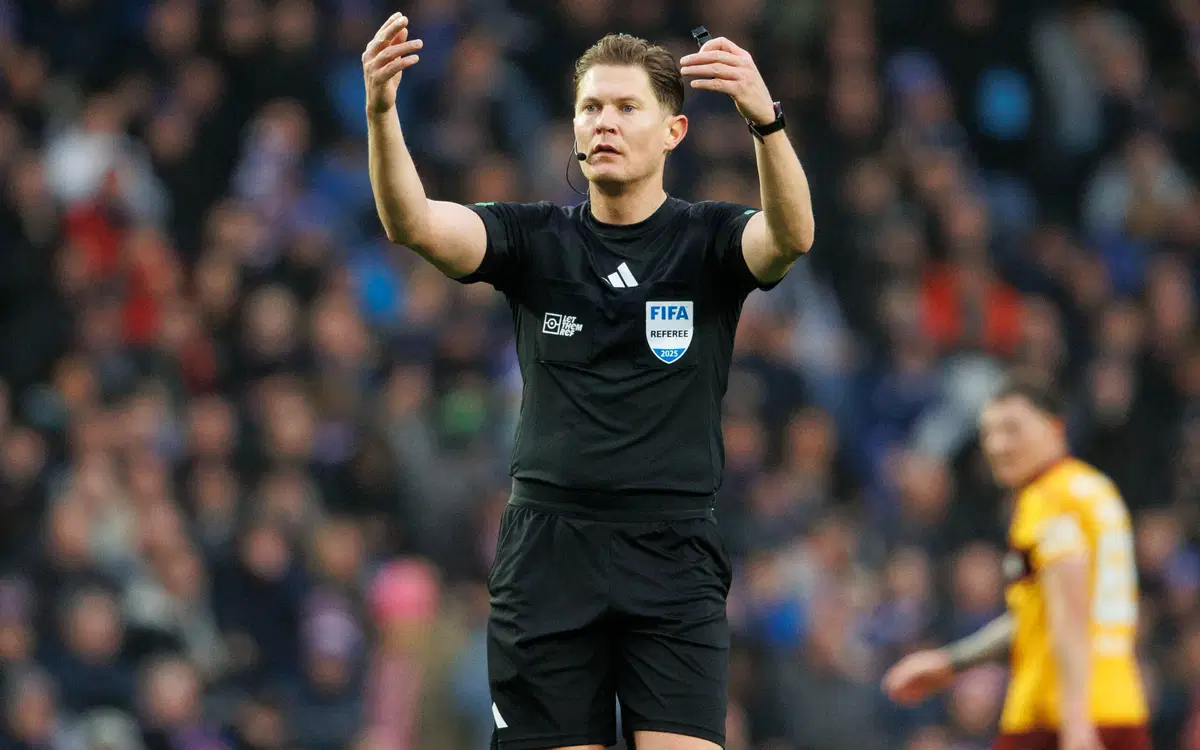
Last night, in the absence of a Celtic game to talk about or watch, a lot of people kept an eye on the match at Ibrox. Once again, we saw decisions that infuriated an opposition manager. Even when that opposition manager was Neil McCann.
What stood out was not just the decisions themselves, but the way the media spun them. One word cropped up repeatedly, both in relation to the penalty and red card given against Kilmarnock and the decision that did not go against James Tavernier.
Subjective is a dangerous word in football regulations. If you actually read the laws of the game, the rules exist in black and white. They do not inhabit some vague, subjective universe. The laws are written deliberately to avoid subjectivity. They aim to be clear, defined, and enforceable. That is precisely because the game demands impartiality. That is the literal point of having laws in the first place.
When rules lose their clarity, when they become open to interpretation, when subjectivity creeps in, that is where bias lives. That is where corruption thrives. Too much of Scottish football’s decision-making process now rests on subjective judgement, and those judgements consistently generate the same problems.
will ignore it completely. None will conduct a serious deep dive. None will place the Tavernier foul alongside the Trusty red card and ask why one resulted in dismissal while the other did not.
One decision favoured Ibrox. One went against Celtic. That appears to be the pattern. It is the only explanation that makes sense.
When subjective decisions repeatedly tilt in the same direction, the list of plausible explanations narrows dramatically. At some point, you call them what they are.