What happens when a once-hyped talent vanishes from the spotlight, plagued by a rare and relentless condition that leaves him feeling half-paralysed every time he steps onto the pitch? For one promising midfielder, years of frustration, limited minutes, and failed conservative treatments have finally led to a decisive step under the knife.
Now, with recovery underway, hope is flickering back to life in a career that many had quietly written off.
The story is one of resilience, medical setbacks, and the quiet determination required to keep chasing a dream that has slipped further out of reach with each passing season.
After enduring chronic compartment syndrome – a condition where pressure builds inside the muscle compartments of the lower leg, restricting blood flow and mobility – the player has opted for surgery in a bid to reclaim his future.
A Rare Condition That Changed Everything
Chronic compartment syndrome is not a common football injury. Unlike a typical muscle strain or ligament tear that heals with rest and rehabilitation, this condition creates a vicious cycle. During prolonged running or intense match action, the calf muscles expand. In a normal leg, the surrounding tissue accommodates that expansion.
In cases of chronic exertional compartment syndrome, the fascia – the tight connective tissue surrounding the muscle groups – fails to yield. Pressure rises, blood vessels and nerves become compressed, and the player experiences pain, tightness, weakness, and a frightening loss of control.
For this particular midfielder, the sensation was especially severe. He has previously described the feeling as being “half paralysed.” Ankle movement becomes restricted. The foot refuses to lift properly. What should be fluid, athletic motion turns into a struggle just to complete a simple sprint.
The result? Just 536 minutes of senior football since June 2023 – a damning statistic for a player once considered among Norway’s brightest prospects.
From Big-Money Move to Forgotten Figure
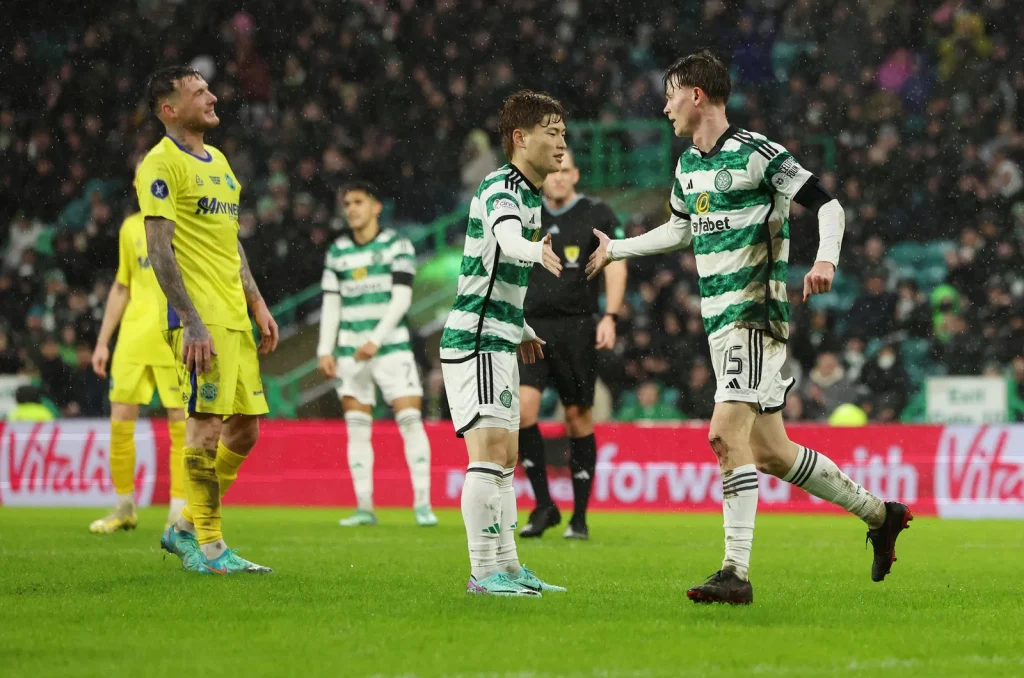
Odin Thiago Holm arrived at Celtic in the summer of 2023 with significant expectation. Signed from Vålerenga for a reported £2.6 million on a long-term deal, the central midfielder had already featured on The Guardian’s prestigious “Next Generation” list alongside future stars such as Jamal Musiala and Florian Wirtz.
At just 20 years old, he possessed the technical quality, vision, and composure that suggested a bright future in Glasgow’s green and white.
Reality proved far more complicated. Limited opportunities under successive managers, coupled with the emerging physical issues, restricted his impact. A loan spell in Major League Soccer with Los Angeles FC in 2025 offered a fresh environment and a chance to build minutes, but the same calf problems resurfaced.
Appearances remained scarce. Confidence and rhythm suffered.
By early 2026, a return home to Vålerenga on loan made sense for all parties. Familiar surroundings, a club that understood his history, and a league that has grown in intensity and quality offered the best platform to rebuild. Yet even there, the underlying condition continued to limit him.
Why Surgery Became the Only Option
For a long time, the preferred approach at Celtic was conservative management. Rest, modified training loads, and non-surgical interventions were prioritised. Among those interventions was a series of Botox injections administered in Wyoming.
The theory was straightforward: by temporarily paralysing specific points in the calf muscle that were compressing blood vessels and nerves, normal circulation could be restored during exertion.
The treatment brought temporary relief. Different dosages were tested – half doses to minimise side effects, then full doses that required lengthy recovery periods. Each time, symptoms eventually returned.
The balloon-in-a-narrow-tube effect described by the player himself would reappear after just 10 to 15 minutes of continuous running.
Eventually, the decision was made. Speaking candidly after the procedure, Holm explained: “I finally got it operated on and it feels really good. I’m a little more optimistic after talking to some people who have been through the same thing and got better. So I’ll just keep my fingers crossed.”
He was clear about the difference in approach: “An operation was talked about for a long time, but Celtic wanted to go in a more conservative direction without it having any effect, so it ended up with surgery.
It’s good to come to a place where they have understanding and knowledge of the damage, so we can get it sorted out.”
Learning Through the Hard Times
Injury and adversity can break some careers. For others, they become part of the education. Holm has been forced to develop mental resilience far earlier than most players of his generation. With so little football under his belt in recent years, the usual pathway of consistent match minutes, tactical refinement, and physical conditioning has been interrupted.
“I haven’t played that much football, so I’ve learned how to get through tough times. That’s an extra part of my experience too,” he reflected. “I think I have a future playing football. As long as my legs are okay now, there’s nothing holding me back.”
That final sentence carries particular weight.
At 23, with two years still remaining on his Celtic contract, the window of opportunity has not closed. Successful recovery from fasciotomy – the surgical release of the restrictive fascia – has allowed many athletes with chronic exertional compartment syndrome to return to high-level sport. While outcomes vary and rehabilitation requires patience, the procedure offers a realistic chance of lasting relief where other methods failed.
A Changing Norwegian Landscape
Beyond the personal recovery story, Holm also offered an interesting perspective on the domestic game in Norway. Having experienced both the Scottish Premiership and a brief spell in MLS, he believes the gap between Eliteserien and some of Europe’s bigger leagues has narrowed.
“It’s not like a player from here couldn’t have gone straight into the Celtic team and done well,” he said. “The difference in quality isn’t that big. Valerenga and the Norwegian League as a whole are in a good place and the league has made big strides in recent years in terms of intensity, among other things.”
That assessment will interest scouts and coaches monitoring Scandinavian talent. It also underlines why a successful loan spell back home could serve as the ideal launchpad.
Regular football, competitive intensity, and the psychological boost of performing in front of familiar supporters may provide exactly the platform needed to prove fitness and form before any potential return to Scotland or further opportunities elsewhere.
What Comes Next?
The road ahead remains carefully managed. Post-operative recovery from compartment syndrome surgery typically involves a structured rehabilitation programme focusing on gradual loading, range of motion, and progressive return to running.
Full competitive action is rarely immediate. Yet the early signs are encouraging. Holm has already expressed optimism after speaking with others who underwent similar procedures and regained full function.
For Celtic, the situation is one of patient monitoring. The club still holds the player’s registration for two more seasons.
A fully fit, confident, and match-sharp version of the midfielder who arrived with such promise would represent a valuable asset – whether as a squad option, a potential sale, or a player ready to finally contribute consistently at Parkhead.
For the player himself, the goal is simpler and more profound: to play without the constant fear that his legs will betray him mid-match. To rediscover the joy and freedom that first made him fall in love with the game.
To prove that the talent that once put him on the same lists as Europe’s elite was never imaginary – it was simply waiting for a healthy body to unlock it again.
In football, careers can turn on a single decision. For Odin Thiago Holm, that decision was surgery. The operation is complete. The recovery is underway. And for the first time in a long while, the future feels open rather than restricted.
Whether that future ultimately lies back at Celtic, in Norway, or somewhere new remains to be written. What is already clear is that this chapter – the one defined by pain, limited minutes, and quiet frustration – may finally be coming to a close.