One of the most explosive VAR controversies of the Scottish Premiership season unfolded on May 3, 2026, as Hibernian snatched a dramatic equaliser against Celtic — and sparked outrage that continues to ripple across Scottish football.
What should have been a routine half-time talking point quickly escalated into one of the most debated refereeing decisions of the campaign, raising serious questions about VAR consistency, officiating standards, and the interpretation of handball laws in modern football.
Incident Breakdown: Chaos at Easter Road
The flashpoint came in the dying moments of the first half at Easter Road, a stadium already buzzing with tension. Hibernian had been reduced to 10 men earlier in the match following a controversial red card, leaving them under immense pressure against a relentless Celtic side chasing crucial points in the title race.
Despite the numerical disadvantage, Hibs refused to collapse. Instead, they pushed forward in search of an unlikely breakthrough — and found it in dramatic fashion.
Captain Joe Newell, a player known for his composure and leadership, found himself in the right place at the right time inside a crowded penalty area. As the ballé ricocheted through bodies, Newell made contact and guided it into the net to level the match at 1-1.
For a brief moment, the home crowd erupted in celebration. But almost immediately, Celtic players began protesting furiously.
Replays suggested that Newell may have used his arm to control or direct the ball before scoring. The incident was not clear-cut at full speed, but slow-motion footage appeared to show the ball making contact with his arm in a way that many deemed illegal.
Celtic players surrounded the referee, gesturing angrily and demanding a VAR intervention. The tension inside the stadium reached boiling point as all eyes turned to the officials.
After a prolonged review, the decision was made: goal stands.
The reaction was immediate and explosive.
VAR Decision Sparks Division
Under current football regulations, handball decisions are among the most subjective in the game. Officials must determine whether the arm is in an unnatural position, whether the contact is deliberate, and whether the incident constitutes a “clear and obvious error” — the threshold required for VAR intervention.
In this case, VAR officials reviewed multiple angles but ultimately concluded that there was not enough evidence to overturn the on-field decision.
This ruling instantly divided opinion.
Pundits across major broadcasts reacted with disbelief. Former professionals including James McFadden, Aiden McGeady, and Kris Boyd debated the incident intensely, each offering differing interpretations.
Boyd described the footage as “inconclusive,” suggesting that the available angles did not definitively prove a handball offense. However, others strongly disagreed, arguing that the ball’s change in trajectory indicated clear arm involvement.
One of the biggest talking points was the referee’s lack of involvement in the final decision. Despite the controversy, the on-field official was not sent to review the footage on the pitch-side monitor — a move that has become standard practice in many high-profile leagues.
This raised further questions about VAR protocol in Scotland and whether referees are being given enough autonomy in critical moments.
The Psychological Impact on Players
Beyond the technicalities of the decision, the incident had a clear emotional impact on the players involved.
Celtic’s reaction was one of visible frustration and disbelief. For a team competing at the highest level with expectations of winning every match, such decisions can feel like a direct blow to their ambitions.
Moments like these test a team’s mental resilience. Maintaining focus after a perceived injustice is one of the hardest challenges in elite football, and it often separates champions from contenders.
On the other side, Hibernian players embraced the moment. Down to 10 men and under pressure, they saw the goal as a reward for their persistence and determination. Regardless of the controversy, it galvanized their belief and energy heading into the second half.
Title Race Pressure Meets Controversy
The stakes surrounding this incident cannot be overstated.
Celtic are deeply involved in a tightly contested title race, where even a single dropped point can have massive consequences. Every decision, every goal, and every refereeing call carries added weight at this stage of the season.
For Hibernian, the context is equally intense. The club is battling for European qualification, a goal that could define their season and shape their financial and sporting future.
Joe Newell himself had been in the spotlight prior to the match, addressing speculation that Hibs might not compete fully due to external rivalries involving Edinburgh counterparts Hearts. He firmly dismissed those claims, emphasizing the professionalism and integrity of his team.
This controversial goal, therefore, took on symbolic significance — representing Hibs’ refusal to back down, even under difficult circumstances.
Bigger Picture: VAR Under Fire Again
This incident is far from isolated.
VAR, introduced to reduce errors and improve fairness, continues to generate debate across football. While it has corrected many clear mistakes, it has also introduced new layers of complexity and controversy.
In Scottish football, concerns about VAR consistency have been growing throughout the season.
Key issues highlighted by this incident include:
- Inconsistent application of handball rules
- Lack of transparency in decision-making
- Limited use of pitch-side monitors
- Heavy reliance on subjective interpretation
- Communication gaps between officials and fans
Fans often expect VAR to deliver clear and definitive answers. However, incidents like this demonstrate that even with technology, many decisions remain open to interpretation.
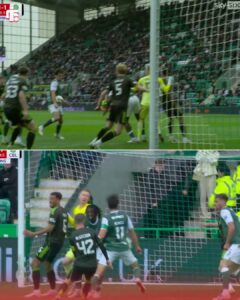
The role of broadcast angles also cannot be ignored. Different camera perspectives can create entirely different impressions of the same incident, influencing public opinion and fueling debate.
As clips circulate across social media platforms, discussions intensify. Fans dissect every frame, pundits offer analysis, and narratives quickly form — often before official explanations are provided.

The Role of Social Media in Amplifying Controversy
In today’s digital age, moments like this no longer remain confined to the stadium.
Within minutes, footage of the incident spread across platforms such as X, Facebook, and YouTube, reaching audiences far beyond those watching live.
This instant exposure amplifies reactions and intensifies scrutiny. Fans from around the world weigh in, often with strong and conflicting opinions.
Social media also creates pressure on officials and governing bodies. Decisions are analyzed in real time, and any perceived inconsistency can quickly become a trending topic.
While this level of engagement highlights football’s global appeal, it also increases the challenges faced by referees operating under immense scrutiny.
Historical Context: A Pattern of Controversy
This is not the first time Celtic and Hibernian have been involved in contentious VAR decisions.
Matches between these sides have produced several controversial moments in recent seasons, contributing to a growing narrative of tension and distrust.
Each new incident adds to the debate, reinforcing perceptions — whether justified or not — about fairness and consistency in officiating.
For supporters, these patterns matter. Football is not just about results; it is about belief in the integrity of the competition.
Football Drama at Its Peak
Beyond tactics, rules, and technology, this incident captures the essence of football itself.
The passion. The drama. The unpredictability.
Hibernian’s resilience with 10 men showcased determination and character. Celtic’s furious reaction reflected the immense pressure that comes with competing for major honours.
Moments like these are why football remains the world’s most captivating sport.
They spark debate, divide opinion, and keep fans engaged long after the final whistle.
What Happens Next?
The fallout from this incident is likely to continue.
Calls for greater transparency in VAR decisions may intensify. Discussions about rule interpretation and officiating standards are expected to dominate headlines in the coming days.
For Celtic, the focus will shift to maintaining momentum in the title race despite frustration. For Hibernian, the result could provide a crucial boost in their push for European football.
But beyond the immediate implications, this moment will be remembered as one of the defining controversies of the season.
Conclusion
In the end, whether the decision was right or wrong may never be universally agreed upon.
What is certain, however, is its impact.
This was more than just a goal — it was a moment that could shape narratives, influence outcomes, and define perceptions of fairness in Scottish football.
As debate continues among fans, pundits, and officials, one thing remains clear: VAR, for all its benefits, is still far from eliminating controversy.
And in a sport driven by passion and opinion, perhaps that was always inevitable.